
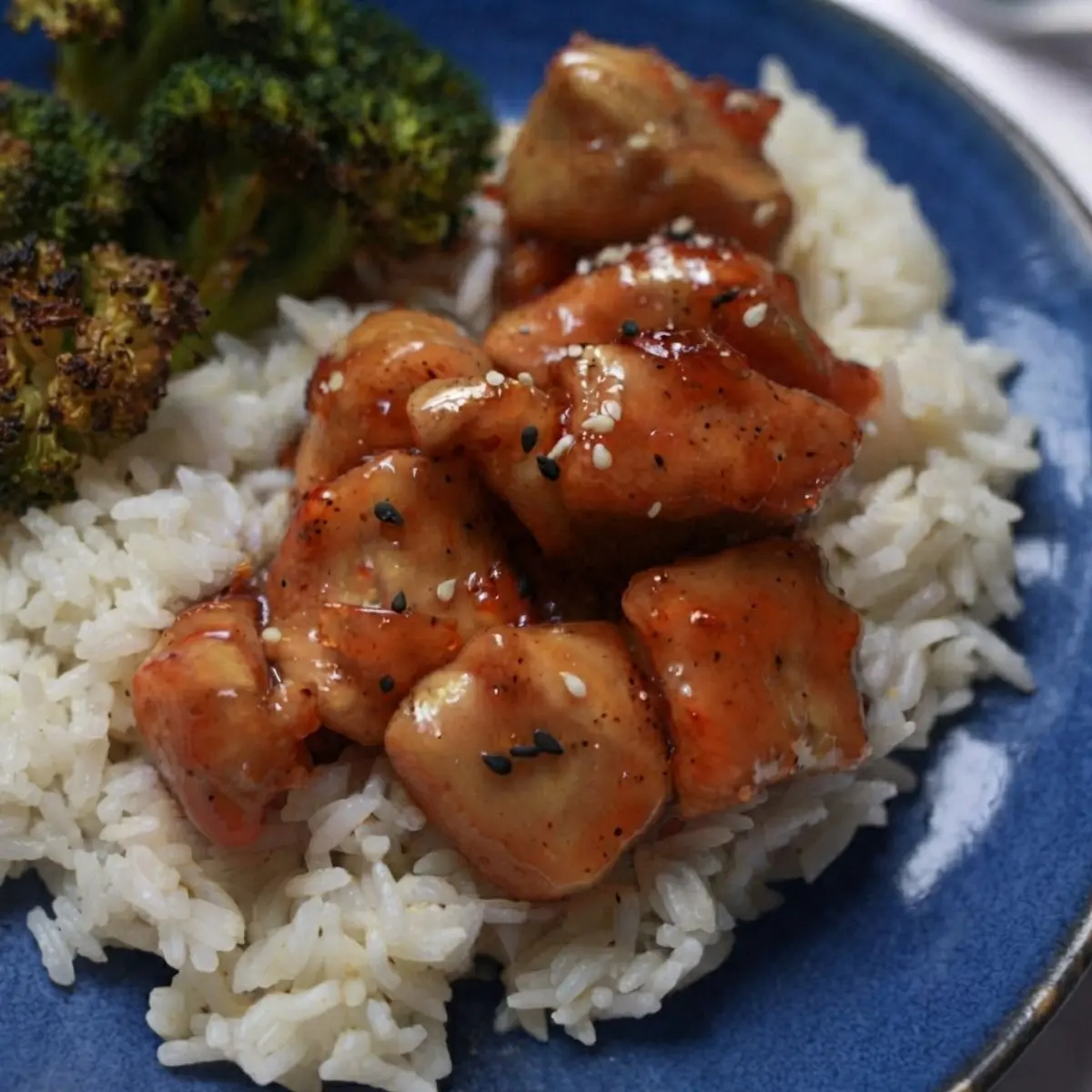
Orange Marmalade Chicken Recipe
This orange marmalade chicken features crispy chicken coated in a glossy sauce made with orange marmalade, soy sauce, garlic, and ginger. Sweet, tangy, and savory, it’s ready in about 30 minutes.
If you’re looking for an easy way to make orange chicken with orange marmalade, this recipe delivers the same sweet, tangy flavor without needing fresh orange juice, zest, or extra sugar. Whether it’s your first time making this recipe or you’re looking for an easier alternative to takeout, you’ll get restaurant-style flavor with minimal effort.
Table of Contents
Why You’ll Love This Orange Marmalade Chicken
Orange marmalade is what makes this recipe so easy. Instead of squeezing fresh oranges, grating zest, and measuring extra sugar, one jar gives you the citrus flavor, sweetness, and thick consistency you need for a rich, glossy sauce. It’s a simple shortcut that doesn’t sacrifice flavor.
Here’s why you’ll want to make this recipe again and again:
- Ready in about 30 minutes, making it perfect for busy weeknights.
- Crispy chicken with a light coating that stays crunchy even after it’s tossed in the sauce.
- A sweet, tangy, and savory glaze that’s flavorful without being overly sugary.
- Made with simple pantry staples—no specialty ingredients required.
- Fresh garlic, ginger, and orange marmalade create a homemade flavor that’s better than takeout.
- Easy to customize with chicken breasts, chicken thighs, your favorite vegetables, or a pinch of red pepper flakes for extra heat.
- Great for meal prep since the sauce can be made ahead of time, and leftovers reheat well.
Whether you’re cooking a quick family dinner or looking for an easy homemade alternative to takeout, this recipe delivers crispy chicken coated in a sticky orange glaze with minimal effort.
Ingredients You’ll Need
You’ll only need a handful of pantry staples and a few fresh ingredients to make this recipe. Instead of using fresh orange juice, orange zest, sugar, and several seasonings to build the sauce, orange marmalade combines much of that flavor in one ingredient, making this recipe quicker without sacrificing its signature sweet citrus taste.
For the Chicken
- 1½ pounds boneless, skinless chicken thighs or chicken breasts, cut into 1-inch bite-sized pieces (Chicken thighs stay extra juicy after frying, while chicken breasts are a leaner option.)
- 2 large eggs, beaten
- ½ cup all-purpose flour
- ½ cup cornstarch
- 1 teaspoon salt
- ½ teaspoon black pepper
- 2–3 cups neutral frying oil, such as vegetable, canola, avocado, or peanut oil
For the Orange Marmalade Sauce
- ¾ cup orange marmalade
- 3 tablespoons low-sodium soy sauce (Regular soy sauce works too, but the sauce will taste slightly saltier.)
- 2 tablespoons rice vinegar (Distilled white vinegar or apple cider vinegar can be used if needed.)
- 2 garlic cloves, minced
- 2 teaspoons fresh ginger, grated
- 1 teaspoon fresh orange zest (Adds an extra burst of fresh citrus aroma.)
- ¼ teaspoon white pepper
- ¼ teaspoon crushed red pepper flakes (Optional, for a little heat.)
- 1 teaspoon sesame oil
- 1 tablespoon cornstarch
- 2 tablespoons warm water
For Serving
- Steamed jasmine or white rice
- Fried rice or noodles (optional)
Optional Garnishes
- Sliced green onions
- Sesame seeds
- Extra fresh orange zest
Ingredient Notes
Even though this orange marmalade chicken uses everyday ingredients, each one helps create the crispy texture and balanced sweet-savory flavor that makes this recipe so satisfying. Here are the ingredients that make the biggest difference.
Orange Marmalade
Orange marmalade is the shortcut that brings this recipe together. Instead of combining fresh orange juice, zest, and sugar, it delivers all three in one ingredient. Because it contains pieces of orange peel, it gives the sauce a deeper citrus flavor while naturally creating a thick, glossy glaze with very little extra cornstarch.
Chicken
Boneless, skinless chicken thighs are the best choice if you want extra juicy, tender chicken after frying. Chicken breasts are a leaner alternative and work just as well—just be careful not to overcook them. Whichever you choose, cut the chicken into evenly sized pieces so everything cooks at the same rate.
Cornstarch
Cornstarch has two important jobs in this recipe. It creates a light, crispy coating on the chicken and also helps the sauce cling to every piece instead of pooling in the pan. Mixing it with a little flour gives you a coating that’s crisp, golden, and not too heavy.
Garlic and Ginger
Fresh garlic and ginger balance the sweetness of the marmalade with savory flavor and bright aromatics. Finely mince the garlic and grate the ginger so they blend smoothly into the sauce. Cook them just until fragrant—about 30 to 60 seconds—to keep the garlic from becoming bitter.
Rice Vinegar
Rice vinegar adds a gentle acidity that keeps the sauce from tasting overly sweet. Its mild flavor blends naturally with the orange marmalade and soy sauce, creating a more balanced glaze. If needed, distilled white vinegar or apple cider vinegar can be used as substitutes.
How to Make Orange Marmalade Chicken
This easy orange chicken recipe comes together in two simple parts: crispy fried chicken and a quick orange marmalade sauce. Frying the chicken in batches and tossing it with the sauce at the very end helps every piece stay crisp while soaking up plenty of flavor.
Step 1: Prep and Coat the Chicken
Pat the chicken dry, then cut it into evenly sized, 1-inch pieces so they cook at the same rate. In one bowl, whisk together the eggs with a tablespoon of vegetable oil and a pinch of salt. In another bowl, combine the flour, cornstarch, salt, and black pepper.
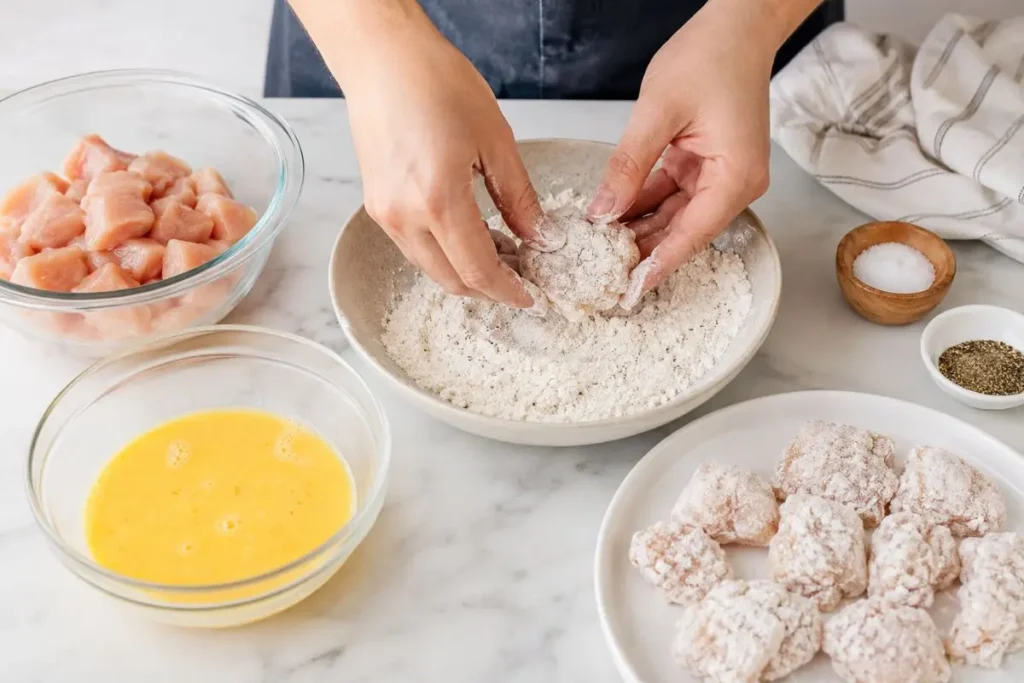
Dip each piece into the egg mixture, then press it firmly into the flour mixture until well coated. Pressing the coating onto the chicken helps it stick during frying and creates a crisp, craggy crust.
Step 2: Heat the Oil and Fry in Batches
Pour 2 to 3 inches of neutral oil into a heavy skillet or Dutch oven and heat it to 350°F (175°C). If you don’t have a thermometer, drop in a little coating—it should sizzle immediately and float to the surface.
Fry the chicken in small batches for about 4 to 6 minutes, turning occasionally, until it’s lightly golden and cooked through. Avoid overcrowding the pan, as it lowers the oil temperature and prevents the coating from becoming crispy.
Remove each batch to a wire rack instead of paper towels. The coating will continue to darken slightly as it rests, so it’s better to pull the chicken out while it’s still lightly golden rather than waiting for a darker color.
Step 3: Make the Orange Marmalade Sauce
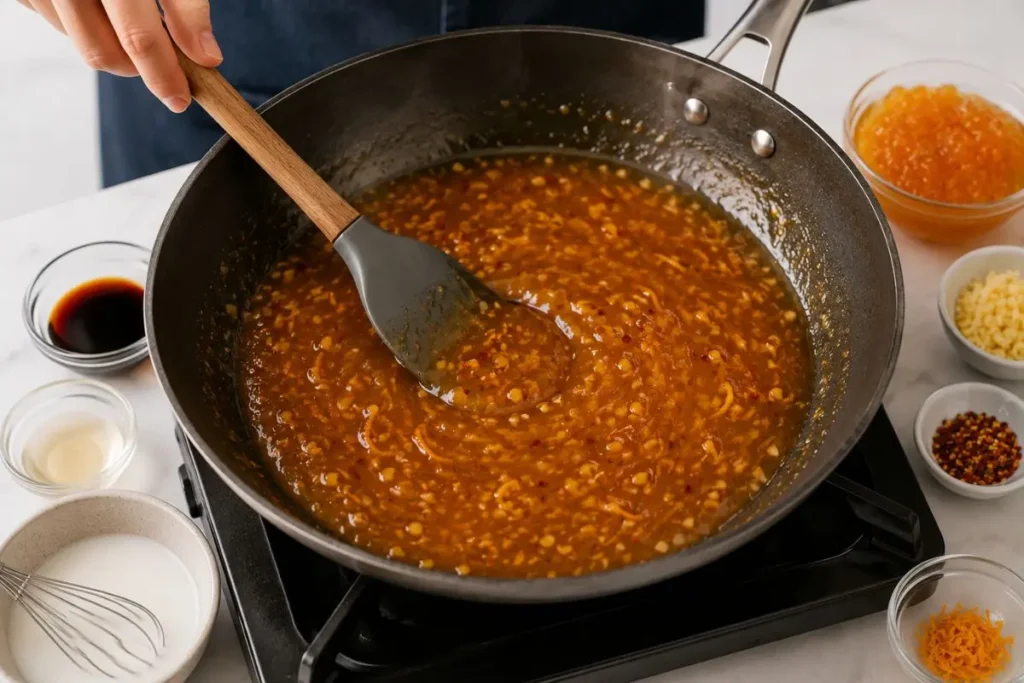
While the chicken cooks, heat a small drizzle of oil in another pan over medium heat. Add the garlic, ginger, and red pepper flakes, cooking for about 30 seconds until fragrant.
Stir in the orange marmalade, soy sauce, rice vinegar, white pepper, and orange zest until smooth. Whisk together the cornstarch and warm water, then stir it into the sauce. Simmer for 1 to 2 minutes, until the sauce becomes glossy with a consistency similar to warm maple syrup.
Step 4: Toss and Serve
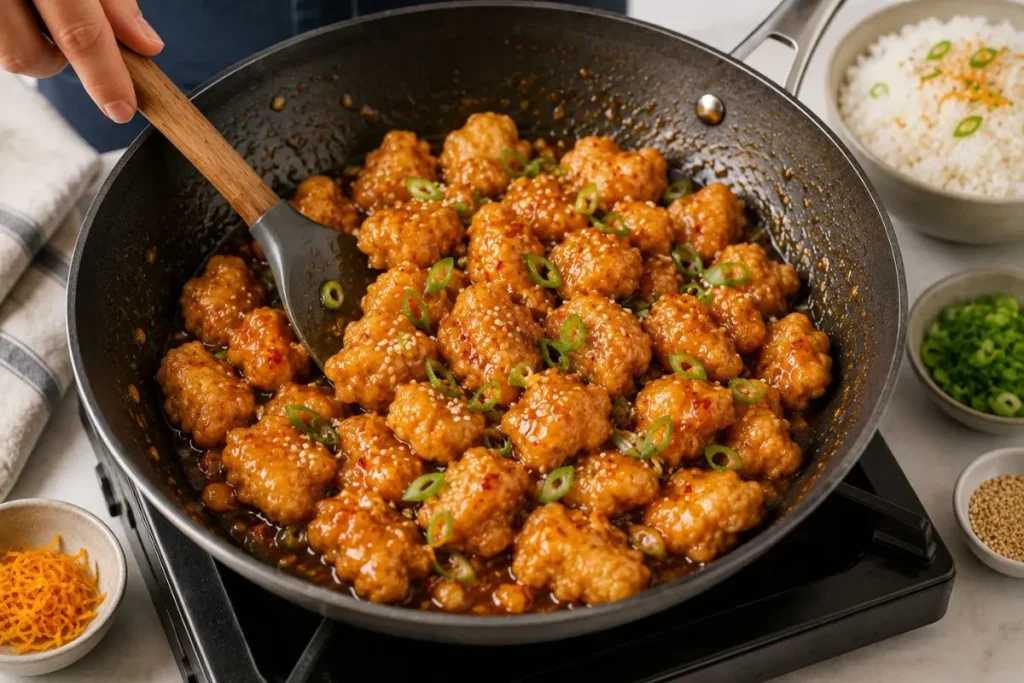
Add the hot fried chicken directly to the sauce and toss gently until every piece is evenly coated. Since the chicken is still hot, it quickly absorbs the sauce while keeping much of its crisp coating. Avoid over-stirring, which can soften the crust.
Serve immediately over steamed rice, fried rice, or your favorite vegetables. Finish with sliced green onions, sesame seeds, and a little extra orange zest for a fresh burst of citrus.
Expert Tips
These simple tips will help you get crispy chicken and a glossy orange marmalade sauce every time.
Cut Even-Sized Pieces
Keeping the chicken pieces close to the same size helps them cook evenly, so you don’t end up with some pieces drying out while others are still undercooked.
Fry in Small Batches
Avoid overcrowding the pan. Frying fewer pieces at a time helps the oil stay hot, which gives the coating a lighter, crispier texture.
Keep the Oil Around 350°F
For the best results, fry at about 350°F (175°C). If the oil is too cool, the coating absorbs excess oil. Too hot, and the outside browns before the chicken cooks through.
Remove the Chicken While It’s Lightly Golden
Don’t wait for a deep golden color. The coating continues to darken slightly after the chicken comes out of the oil.
Use a Wire Rack Instead of Paper Towels
A wire rack lets excess oil drain while keeping air circulating around the chicken, helping the coating stay crisp.
Let the Sauce Thicken Just Enough
Once you add the cornstarch slurry, the sauce thickens quickly. You’re looking for a glossy consistency similar to warm maple syrup that coats the chicken without feeling heavy.
Toss the Chicken Just Before Serving
For the crispiest texture, add the chicken to the sauce while it’s still hot and toss just before serving. The longer it sits in the sauce, the softer the coating becomes.
Finish with Fresh Orange Zest
A little fresh orange zest added at the end brightens the flavor and gives the finished dish a fresher citrus aroma.
Make Extra Sauce for Vegetables
If you’re adding broccoli, carrots, bell peppers, or snap peas, increase the sauce by about 50% so everything stays evenly coated.
Common Mistakes to Avoid
Even a few small mistakes can affect the texture and flavor of this crispy orange chicken. Keep these tips in mind for the best results every time.
Don’t Fry at the Wrong Temperature
For crispy, golden chicken, keep the oil around 350°F (175°C). Oil that’s too cool makes the coating greasy, while oil that’s too hot can brown the outside before the chicken is fully cooked.
Don’t Overcrowd the Pan
Fry the chicken in small batches instead of adding everything at once. Overcrowding lowers the oil temperature and prevents the coating from getting crisp.
Cut the Chicken Evenly
Try to cut the chicken into similar 1-inch pieces. Even-sized pieces cook at the same rate, so you won’t end up with some pieces overcooked and others undercooked.
Don’t Skip the Cornstarch
Cornstarch is what gives the chicken its light, crispy coating. It also helps the sauce cling to the chicken, creating that classic sticky orange glaze.
Watch the Garlic Closely
Garlic only needs about 30 seconds to become fragrant. If it browns too much, it can add a bitter flavor to the sauce.
Don’t Overcook the Sauce
Once the cornstarch slurry is added, the sauce thickens quickly. Remove it from the heat as soon as it becomes glossy and coats the back of a spoon.
Toss the Chicken at the End
Wait until the sauce is completely finished before adding the fried chicken. This helps the coating stay crisp instead of softening too early.
Serve It Right Away
sticky orange chicken tastes best fresh. The longer it sits in the sauce, the more the crispy coating softens, so serve it as soon as it’s coated.
Recipe Variations
This recipe is easy to customize, so don’t feel like you have to follow it exactly as written. Whether you want a lighter version, a little extra heat, or a different protein, these simple variations all work well without changing the character of the dish.
Swap in Chicken Breasts
Chicken breasts are a leaner alternative to thighs and work just as well. Since they cook a little faster and can dry out more easily, remove them from the oil as soon as they’re golden and cooked through.
Turn Up the Heat
For a spicier version, stir ½ to 1 teaspoon of crushed red pepper flakes into the sauce. You can also use a spoonful of chili garlic sauce for a deeper, slightly more complex heat.
Try a Different Marmalade
Orange marmalade gives this dish its classic flavor, but lemon or pineapple marmalade are both delicious alternatives. Lemon adds a brighter citrus note, while pineapple brings a slightly sweeter twist.
Add More Vegetables
Turn this into a complete one-pan meal by adding vegetables like:
- Broccoli florets
- Bell peppers
- Snap peas
- Carrots
- Baby corn
If you’re adding several cups of vegetables, increase the sauce by about 50% so everything stays evenly coated.
Use Another Protein
This sauce isn’t just for chicken. It also works well with:
- Shrimp
- Pork tenderloin
- Salmon
- Crispy tofu
Just adjust the cooking time for your protein. Shrimp, for example, cooks very quickly and only needs a few minutes.
Make It Lighter
For a lighter version, skip the deep frying and lightly pan-fry the coated chicken, or cook it in the oven or air fryer before tossing it with the sauce. The coating won’t be quite as crisp, but the flavor is just as satisfying.
Use Sugar-Free Marmalade
If you’re looking to reduce the sugar, simply swap in a sugar-free orange marmalade. You’ll still get plenty of citrus flavor without changing the rest of the recipe.
What to Serve With homemade orange chicken
This sweet and savory chicken pairs well with simple sides that soak up the sticky orange sauce or add a fresh contrast to the meal.
Steamed White Rice
Jasmine or long-grain white rice is the classic choice. It absorbs the extra sauce without competing with the bold citrus flavor.
Fried Rice
For a takeout-style dinner, serve it with homemade fried rice loaded with eggs, peas, carrots, and green onions.
Brown Rice
Brown rice adds a slightly nutty flavor and extra fiber while pairing just as well with the sweet orange glaze.
Craving More Chicken?
If you’re planning a bigger spread, Cowboy Butter Chicken Wings make a great appetizer to serve alongside this orange marmalade chicken — crispy, garlicky, and just as easy to make at home.
Vegetables
Steamed or stir-fried vegetables help balance the richness of the sauce. Broccoli, bell peppers, snap peas, carrots, bok choy, and mushrooms are all great choices.
Noodles
Lo mein, rice noodles, or even simple buttered noodles make a delicious alternative to rice and pair well with the sticky orange sauce.
Cauliflower Rice
For a lower-carb option, cauliflower rice offers a lighter base while still soaking up plenty of sauce.
Egg Rolls or Spring Rolls
Complete the meal with crispy egg rolls or fresh spring rolls for a restaurant-style dinner at home.
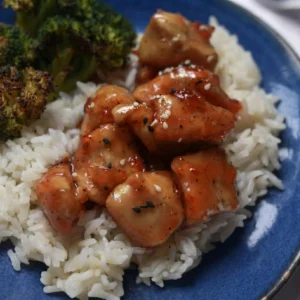
Serving Tip: For a complete meal, serve this orange marmalade chicken with steamed jasmine rice and broccoli, then finish with sesame seeds and sliced green onions for extra flavor and color.
Storage & Make-Ahead Tips
Orange marmalade chicken is at its best served fresh while the coating is still crisp, but leftovers store surprisingly well with the right approach.
Refrigerate Leftovers
Let the chicken cool completely before transferring it to an airtight container. Sealing it while it’s still warm creates condensation, which softens the crispy coating. It will keep well in the refrigerator for up to 4 days.
Freeze for Longer Storage
Leftovers can be frozen for up to 2 months. For the best texture, freeze the fried chicken and the sauce in separate containers whenever possible. Thaw overnight in the refrigerator before reheating.
Reheat for the Best Texture
For the crispiest results, reheat the chicken in an air fryer or oven instead of the microwave.
- Air Fryer: 375°F (190°C) for 3–5 minutes
- Oven: 375°F (190°C) for 8–10 minutes
If the sauce has thickened during storage, stir in a splash of water or orange juice while reheating until it reaches a smooth, glossy consistency.
Microwave (Optional)
The microwave is the quickest option, but it won’t keep the coating as crispy. If needed, heat the chicken in short intervals just until warmed through to help prevent it from becoming rubbery.
Make the Sauce Ahead
The orange marmalade sauce can be prepared up to 3 days in advance and stored in an airtight container in the refrigerator. Warm it gently before tossing it with freshly cooked chicken just before serving for the best flavor and texture.
Make-Ahead Tip: Prepare the sauce ahead of time and fry the chicken just before serving. It’s the easiest way to enjoy a crispy coating with a fresh, glossy orange glaze.
Frequently Asked Questions
Can I make orange chicken with orange marmalade instead of fresh oranges?
Yes. Orange marmalade already contains orange juice, orange peel, and sugar, making it an easy shortcut for homemade orange marmalade chicken. It creates a rich citrus flavor and a naturally thick sauce without needing several separate ingredients.
Can I use chicken breasts instead of chicken thighs?
Absolutely. Chicken breasts make a leaner version of this recipe and work just as well. Just avoid overcooking them, as they tend to dry out faster than chicken thighs.
Can I make this recipe in an air fryer?
Yes. Cook the coated chicken in a preheated air fryer at 400°F (200°C) for 10–12 minutes, flipping halfway through. Toss the chicken with the warm sauce just before serving to help keep the coating crisp.
Can I use store-bought orange marmalade?
Yes. Any good-quality store-bought orange marmalade works well in this recipe. Marmalade with small pieces of orange peel gives the sauce the best citrus flavor and texture.
Is orange marmalade the same as orange jam?
Not quite. Orange marmalade contains pieces of orange peel, which give it a deeper citrus flavor and a slightly more complex taste than regular orange jam.
Can I freeze orange marmalade chicken?
Yes. For the best texture, freeze the fried chicken and the sauce in separate airtight containers for up to 2 months. Thaw overnight in the refrigerator, then reheat and combine just before serving.
Can I make the sauce ahead of time?
Yes. The sauce can be made up to 3 days in advance and stored in an airtight container in the refrigerator. Warm it gently before tossing it with freshly cooked chicken for the best flavor and texture.
How can I make the sauce less sweet?
Reduce the amount of orange marmalade slightly and add a little more rice vinegar or soy sauce to balance the sweetness. This keeps the bright citrus flavor while creating a more savory sauce.
Orange Marmalade Chicken
Ingredients
For the Chicken
- 1½ pounds boneless skinless chicken thighs or chicken breasts, cut into 1-inch pieces
- 2 large eggs beaten
- ½ cup all-purpose flour
- ½ cup cornstarch
- 1 teaspoon salt
- ½ teaspoon black pepper
- 2 –3 cups neutral frying oil
For the Sauce
- ¾ cup orange marmalade
- 3 tablespoons low-sodium soy sauce
- 2 tablespoons rice vinegar
- 2 garlic cloves minced
- 2 teaspoons fresh ginger grated
- 1 teaspoon fresh orange zest
- ¼ teaspoon white pepper
- ¼ teaspoon crushed red pepper flakes optional
- 1 teaspoon sesame oil
- 1 tablespoon cornstarch
- 2 tablespoons warm water
For Serving
- Steamed jasmine rice
- Sliced green onions
- Sesame seeds
- Extra orange zest
Instructions
Coat the Chicken
- Pat the chicken dry and cut it into evenly sized pieces. Dip each piece into the egg mixture, then coat with the flour and cornstarch mixture.
Fry
- Heat the oil to 350°F (175°C) and fry the chicken in small batches for 4–6 minutes, until lightly golden. Transfer to a wire rack.
Make the Sauce
- Cook the garlic and ginger for about 30 seconds, then stir in the marmalade, soy sauce, rice vinegar, orange zest, and seasonings. Add the cornstarch slurry and simmer until glossy.
Toss & Serve
- Add the hot chicken to the sauce and toss gently until evenly coated. Garnish with sesame seeds, sliced green onions, and fresh orange zest. Serve immediately over steamed rice
Notes
- Chicken thighs stay juicier, while chicken breasts are a leaner option.
- Fry in small batches to keep the coating crispy.
- A wire rack keeps the crust crisp better than paper towels.
- Toss the chicken with the sauce just before serving.
- The sauce can be made up to 3 days in advance.