
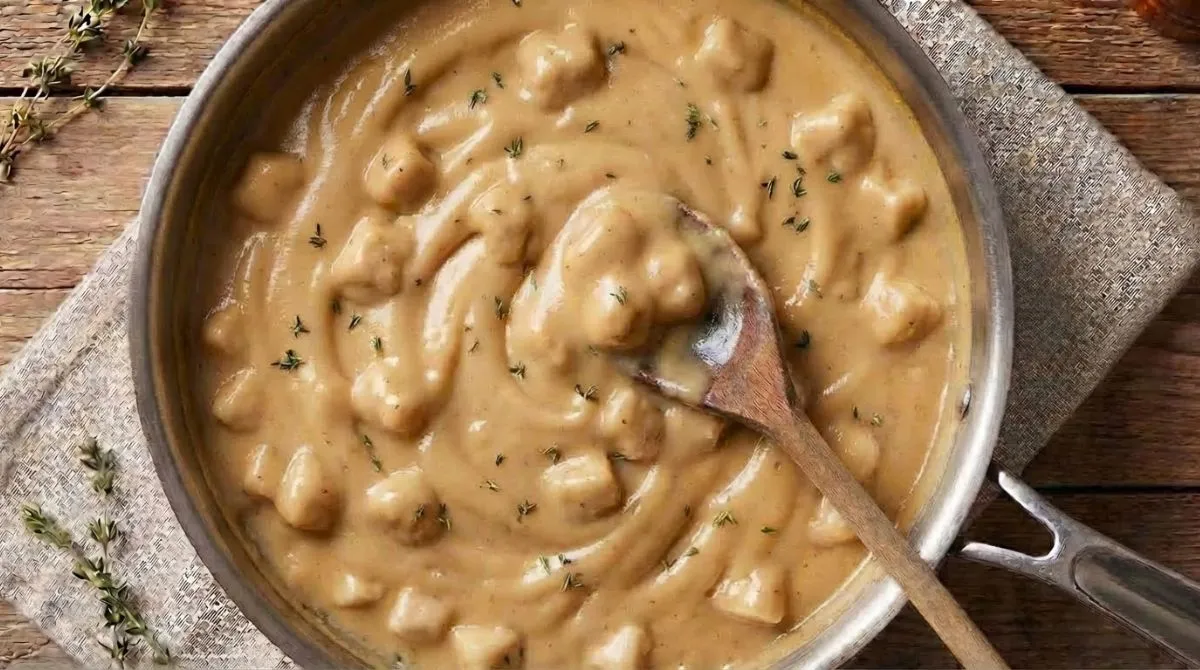
Better Than Canned: Gluten Free Cream of Chicken Soup
Table of Contents
The Best Gluten Free Cream of Chicken Soup (Better Than Canned!)
If you grew up in a household where casseroles were a weekly staple, you know the specific heartbreak of a Celiac diagnosis. Suddenly, that iconic red-and-white can of condensed soup—the glue that held together everything from enchiladas to pot pies—is off-limits.
For years, I tried to find a store-bought alternative that didn’t taste like salted cardboard or cost a fortune. I failed. So, I went into the kitchen with a mission: to create a gluten free cream of chicken soup that wasn’t just a “substitute,” but an upgrade.
I’m talking about a soup so velvety, rich, and savory that you’ll want to eat it straight from the spoon before it ever makes it into a casserole. This isn’t just about removing the wheat; it’s about understanding the science of thickening to create a texture that mimics the classic condensed version perfectly, without the gummy aftertaste of bad starch.
If you’ve been hunting for a cream of chicken soup gluten free recipe that actually tastes like real food and works seamlessly in your grandmother’s old recipes, your search ends here. Let’s reclaim the casserole, shall we?
Is Canned Cream of Chicken Soup Gluten Free?
The short, frustrating answer is: No.
Most commercial condensed soups, including the most famous brands like Campbell’s, rely heavily on wheat flour as a thickening agent. It’s cheap, stable, and creates that familiar gelatinous texture. Even varieties labeled “Healthy Request” or “Low Sodium” typically contain wheat.
While there are some niche brands (like Pacific Foods or Walmart’s Great Value Gluten-Free line) that offer safe options, they often come with significant downsides:
- Availability: You can’t find them in every grocery store.
- Cost: They can cost 2-3 times more than the standard cans.
- Texture: Many canned gluten-free options suffer from separation or a thin, watery consistency that ruins casseroles.
Making it at home is the only way to guarantee safety, control the sodium, and achieve that luxurious texture we crave.
The Ultimate Comparison: Homemade vs. Store-Bought
You might be wondering, “Is it really worth the effort?” Let’s look at the hard data. When you compare this gluten free cream of chicken soup to a standard can of condensed soup, the difference is shocking.
| Feature | Standard Canned Soup | Our Homemade Version |
| Gluten Status | Contains Wheat Flour (Not Safe) | 100% Gluten-Free (Safe) |
| Sodium | ~870mg per 1/2 cup | ~150mg (Controlled by you) |
| Ingredients | MSG, Modified Food Starch, Vegetable Oil, Soy Protein Concentrate | MSG-Free, Butter, Milk, Broth, Spices, Real Chicken |
| Texture | Gelatinous, Jelly-like | Creamy, Velvety, Rich |
| Dietary | High Sodium, Processed | Customizable (Dairy-Free, Keto-friendly options) |
Beyond the health stats, the flavor difference is night and day. The canned version tastes largely of salt and metallic preservatives. The homemade version tastes like roasted chicken and fresh cream.
Ingredients for Homemade Cream of Chicken
To build a flavor profile for this gluten free cream of chicken soup that rivals (and beats) the canned stuff, we need to move beyond just “chicken broth and starch.” We are building layers of flavor.
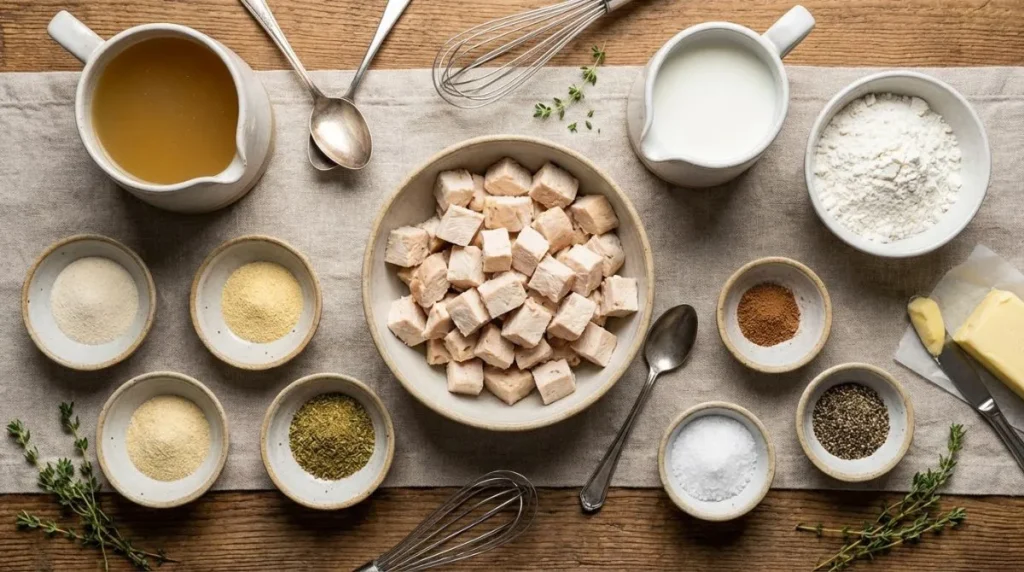
- Chicken Broth: This is the foundation. Use the highest quality gluten-free chicken broth or stock you can find. If you have homemade bone broth, even better—it adds natural gelatin that improves the mouthfeel. Always double-check the label to ensure your broth is certified GF.
- Unsalted Butter: Fat carries flavor. Butter provides the rich, creamy base for our roux. If you need a dairy free cream of chicken soup, don’t worry—we will cover specific substitutions in detail below.
- Milk: Whole milk works best for that classic creamy richness. For an even more decadent version (closer to a “cream of” soup), you can use half-and-half.
- The Thickener (The Secret Weapon): We will discuss this in the “Science” section below, but my top recommendation is Sweet Rice Flour (Mochiko) or a high-quality Gluten-Free All-Purpose Flour blend. Cornstarch is an option, but it comes with caveats.
- Onion & Garlic Powder: Here is where many recipes fail—they rely solely on the broth for flavor. Adding onion and garlic powder gives the soup that savory “umami” punch that mimics the concentrated flavor of condensed soup.
- Poultry Seasoning: A tiny pinch adds the herbal notes (sage, thyme, rosemary) associated with roasted chicken.
- Nutmeg: The Chef’s Secret. You won’t taste “nutmeg” in the final dish, but a tiny pinch enhances the dairy and chicken flavors, adding a warmth and depth that makes people ask, “Why is this so good?”
- Salt & Pepper: To taste. Remember, if you are using this as a condensed soup substitute for cooking, you might want to season it slightly more aggressively than if you were eating it as a bowl of soup.
Can I Use a Different Flour?
This is the most critical part of the recipe. In traditional cooking, a “roux” is made with wheat flour and fat. In gluten-free cooking, we have to be smarter because different starches behave differently.
1. Sweet Rice Flour (Highly Recommended)
Also known as Mochiko or Glutinous Rice Flour (don’t worry, “glutinous” refers to the sticky texture, not gluten).
- Why it wins: Unlike regular rice flour which can be gritty, sweet rice flour is ground ultra-fine and has high starch content. It creates a silky, glossy finish that mimics wheat flour almost perfectly. It is also very stable, meaning it won’t separate as easily as other starches.
2. Gluten-Free All-Purpose Flour
- The reliable backup: A standard blend (like King Arthur Measure for Measure or Bob’s Red Mill 1-to-1) works very well.
- The catch: These blends often contain xanthan gum. This is fine, but if you boil it too vigorously, the gum can sometimes make the texture slightly “snotty” (for lack of a better word). Cook it gently.
3. Cornstarch
- The common pantry staple: You can use cornstarch, but you cannot make a traditional “roux” (cooking it in butter) effectively. You must make a “slurry” (mixing it with cold milk first) and add it at the end.
- The downside: Cornstarch-thickened soups have a tendency to turn gummy or sponge-like when refrigerated or frozen. If you plan to use the soup immediately, cornstarch is fine. If you plan to store it, avoid it.
How to Make Gluten Free Cream of Chicken Soup
This method uses a classic French technique adapted for the gluten-free kitchen. We are making a Roux (fat + flour) and then a Béchamel (roux + milk), and finally transforming it into a Velouté (sauce + stock).
Don’t let the fancy terms scare you; this is a quick & easy process that takes less than 10 minutes.
Step 1: Melt and whisk
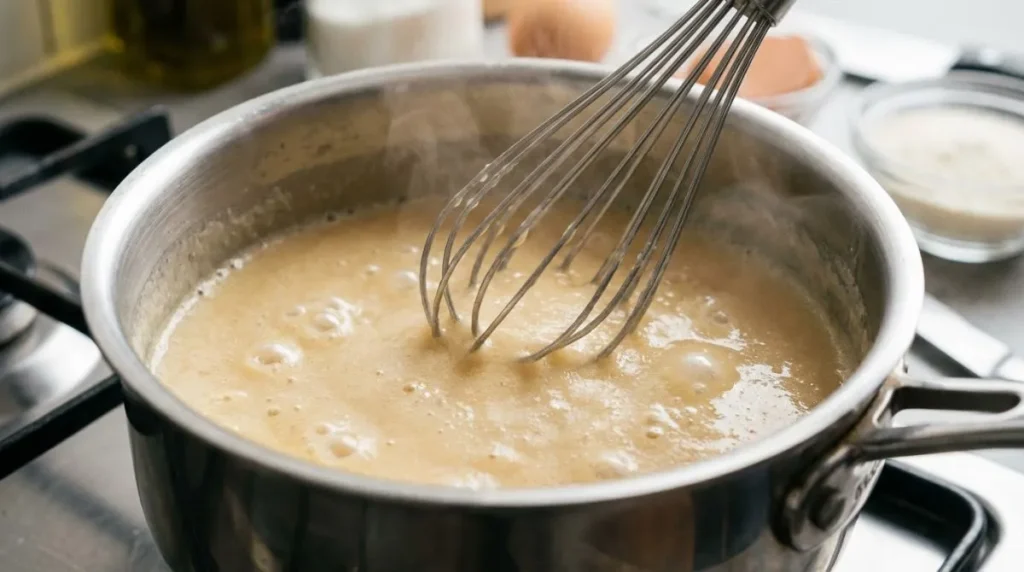
In a medium saucepan over medium heat, melt your butter. Once it’s bubbling, sprinkle in your chosen gluten-free flour.
- The Chef’s Tip: Don’t just dump it in. Whisk it constantly for about 60 to 90 seconds. You want to “cook out” the raw flour taste. You aren’t looking for a dark color (like a gumbo roux), just a pale, bubbly paste. This step is crucial for structure.
Troubleshooting in Real-Time:
- Butter browning too fast? Lift the pan off the heat immediately. You want a blonde roux, not a brown one.
- Flour clumping? Don’t panic. Just keep whisking vigorously. As the butter melts further, it will smooth out into a paste.
Step 2: Season the soup
Before adding liquids, sprinkle your onion powder, garlic powder, poultry seasoning, salt, pepper, and that secret pinch of nutmeg directly into the butter/flour mixture.
- Why now? Spices are oil-soluble. Cooking them in the butter for just 30 seconds “blooms” their flavor, making them far more potent than if you added them to the liquid later.
Troubleshooting in Real-Time:
- Spices sticking to the bottom? This happens if the heat is too high. Add a tiny splash (1 tbsp) of your broth immediately to deglaze the pan and stop the burning process.
Step 3: Make it creamy
This is where texture is born. Slowly—and I mean slowly—pour in the chicken broth while whisking furiously.
- The Technique: Pour a splash, whisk until smooth. Pour another splash, whisk until smooth. Once the broth is incorporated, do the same with the milk.
- The Simmer: Bring the mixture to a gentle simmer (not a rolling boil). You will see the magic happen as the gluten free cream of chicken soup thickens before your eyes. Let it simmer gently for 2-3 minutes to reach full thickness.
- The Finish: Stir in your cooked, diced chicken. If you want it to be exactly like the can, dice the chicken very small.

Troubleshooting in Real-Time:
- Soup too thin? Be patient. Gluten-free flours often take a minute longer to activate than wheat flour. Let it simmer for another 2 minutes.
- Lumps appeared? It happens to the best of us. Simply pour the soup through a fine-mesh sieve, or use an immersion blender for 5 seconds to smooth it out. No one needs to know!
How to Make Dairy Free Cream of Chicken Soup?
I know many of you navigate multiple dietary restrictions. The good news is that this recipe is incredibly adaptable. You can easily turn this into a dairy free cream of chicken soup by swapping two ingredients, but you need to choose your alternatives wisely to maintain that signature creaminess.
The Fat Swap
Replace the butter with an equal amount of:
- Vegan Butter: This is the best option for flavor. Brands like Miyoko’s or Earth Balance work beautifully.
- Olive Oil: Works well, but adds a distinct savory flavor.
- Bacon Fat: For a smoky, rich twist (not vegetarian, obviously, but dairy-free).
The Liquid Swap
This is trickier. You need a liquid with fat content to mimic whole milk.
- Full-Fat Canned Coconut Milk: This is the gold standard for texture. It creates a luxuriously thick dairy free cream of chicken soup. Note: It will impart a slight coconut flavor. To mask this, increase the onion and garlic powder slightly.
- Unsweetened Almond or Cashew Milk: These are much thinner than cow’s milk. If you use these, you may need to increase the amount of flour by about 1 tablespoon to achieve the same thickness.
- Oat Milk (Certified GF): A great middle ground. It’s creamier than almond milk and has a neutral flavor, but double-check that it is certified gluten-free, as oats are often cross-contaminated.
This dairy free cream of chicken soup stores just as well as the original version, though coconut milk versions may solidify more in the fridge (which melts back down perfectly upon heating).
Expert Tips for Success
Making cream of chicken soup gluten free from scratch is simple, but a few technical details separate a “good” batch from a “great” one.
- Temperature Matters: Try to have your milk and broth at room temperature (or slightly warmed) before adding them to the roux. Adding ice-cold milk to a hot butter/flour mixture can sometimes “shock” the starch and cause seizing or clumping.
- Don’t Over-Boil: Once the soup has thickened, reduce the heat. Boiling a milk-based soup too aggressively can cause the dairy to curdle or separate, giving you a grainy texture instead of a smooth one.
- The “Spoon Test”: How do you know it’s done? Dip a metal spoon into the soup and run your finger down the back of the spoon. If the line stays clean and the soup doesn’t run back together immediately (a technique called nappe), it is thick enough.
- Adjusting Thickness:
- Too thick? Whisk in an extra splash of broth.
- Too thin? Let it simmer for another 2 minutes. Remember, it will thicken significantly as it cools.
Variations for this Cream of Chicken Soup Gluten Free Recipe
One of the joys of making this at home is that you aren’t limited to the plain flavor of the can. You can customize this cream of chicken soup gluten free base to match whatever dish you are cooking.
The “Herbalist” (Fresh & Bright)
If you are serving this as a standalone soup rather than a casserole base, fresh herbs are essential.
- How to do it: Stir in 1 tablespoon of fresh chopped parsley, thyme, or chives right at the end of cooking. Do not cook the herbs for long, or they will lose their vibrant color and flavor.
The “Mirepoix” Boost (Pot Pie Style)
This variation adds texture and natural sweetness, making it the perfect base for a Chicken Pot Pie.
- How to do it: Finely dice 1/4 cup of celery, 1/4 cup of carrots, and 1/4 cup of onion. Sauté these veggies in the butter for 5-7 minutes before adding the flour. Then proceed with the recipe as written. The veggies will soften and infuse the roux with incredible flavor.
The “White Wine” Touch (Fancy Dinner)
Want to impress guests? A splash of acidity cuts through the richness of the cream.
- How to do it: After cooking the roux (butter + flour), pour in 1/4 cup of dry white wine (like Sauvignon Blanc or Pinot Grigio). Let it bubble and reduce by half before adding the chicken broth. This adds a sophisticated depth found in French restaurants.
The “Mushroom” Twist (Hybrid Soup)
Can’t decide between Cream of Chicken and Cream of Mushroom? Have both.
- How to do it: Slice 1 cup of baby bella or cremini mushrooms. Sauté them in the butter until they release their liquid and turn golden brown. Then add the flour and continue. The mushrooms add a meaty, earthy umami that makes this cream of chicken soup gluten free recipe unforgettable.
By tweaking this versatile base, you can create a different flavor profile for every night of the week.
Ways to Use This Condensed Soup Substitute
This is the most common question I get: “How do I use this in my old recipes?”
The Magic Ratio
This recipe yields approximately 1.5 to 2 cups of soup.
- Standard Can Equivalent: A standard can of condensed soup is 10.5 oz (approx. 1.25 cups).
- The Math: One batch of this recipe is roughly equivalent to one can of condensed soup. You can use it 1-for-1 in any recipe.
What can you make with gluten free cream of chicken soup?
Since this acts as a binder, it is the backbone of comfort food.
- Gluten-Free Chicken Enchiladas: Mix this soup with sour cream and green chiles for a creamy enchilada sauce.
- Tater Tot Casserole: Mix with ground beef and green beans, top with GF tater tots, and bake.
- Chicken and Rice Casserole: The classic. Mix with cooked rice, broccoli, and cheese, or try our famous Chicken Casserole with Ritz Crackers for a crunchy twist.
- Slow Cooker Sauces: Pour it over chicken breasts in a crockpot for an instant creamy gravy.
Pro Tip: If you are using this as a “condensed” soup substitute, use it exactly as is—thick and rich. If you want to eat it as a bowl of soup for lunch, dilute it with an extra 1/2 cup of broth or milk until it reaches your desired sipping consistency.
Storing and Reheating
Because this recipe uses fresh dairy and no preservatives, it behaves differently than the shelf-stable cans.
Fridge Storage
Store the soup in an airtight container (mason jars work perfectly) in the refrigerator for 3 to 4 days.
- Warning: It will turn into a thick, gelatinous blob in the fridge. Do not panic. This is exactly what it is supposed to do. It means your thickeners are working. It will melt back down the second you heat it.
Can you freeze gluten free cream of chicken soup?
Yes, but with a caveat. Dairy-based soups have a tendency to separate or become slightly grainy when frozen and thawed.
- The Fix: If you freeze this soup, let it thaw in the fridge overnight. When you reheat it, it might look “broken” (oil separating from liquid). Simply pour it into a blender for 10 seconds or use an immersion blender in the pot. This will re-emulsify the fats and return it to a smooth consistency.
- Better Option: If you plan to freeze it in batches for meal prep, make the soup without the dairy (just broth + roux). Freeze that base. When you thaw and reheat it, whisk in the fresh milk then.
How do you reheat this soup?
- Stovetop: Place the gelatinous soup in a saucepan over low heat. Add a splash of water or broth (about 1 tablespoon). Whisk gently as it melts. Do not blast it with high heat, or the dairy may curdle.
- Microwave: Heat in 30-second intervals, stirring vigorously in between to ensure even heating and smooth texture.
Frequently Asked Questions
How much does this recipe make? (Does it equal a can?)
Yes! This recipe yields approximately 1.5 cups (12 oz) of soup. A standard can of Campbell’s Cream of Chicken is 10.5 oz. So, this recipe makes just slightly more than a can, which is perfect because homemade versions often cook down. You can swap one batch of this recipe for one can in any casserole without doing any complex math.
Is this soup Keto, Paleo, or Whole30 friendly?
It depends on the flour you use. If you use Rice Flour or a GF All-Purpose blend (which contains rice/potato starch), it is not strictly Keto, as those are high-carb starches.
- To make it Keto: You would need to thicken the soup using Xanthan Gum or Glucomannan powder instead of flour, and use heavy cream instead of milk. However, the texture will be slightly different (more slippery) than the traditional roux-based soup. Is this cream of chicken soup gluten free and keto-friendly? Only with those specific modifications.
Can I make this vegetarian?
Absolutely. While the name is “Cream of Chicken,” the technique works for any flavor profile. To make a vegetarian or dairy free cream of chicken soup alternative (like Cream of Celery or Mushroom):
- Swap Chicken Broth for Vegetable Broth.
- Omit the chicken meat.
- Sauté mushrooms or celery in the butter/oil at the beginning.
The result is a rich, vegetarian condensed soup base perfect for green bean casseroles.
Why is my soup gummy?
If your soup feels like glue or jelly, it is likely due to one of two things:
- Too much Cornstarch: As mentioned in the “Science” section, cornstarch has a tendency to get gummy. Switching to Sweet Rice Flour usually solves this.
- Overcooking: If you boil the starch too hard for too long, the molecular structure can break down and become stringy or gummy. Simmer gently.
Is this a healthy alternative to canned soup?
Without a doubt. A typical can of condensed soup is loaded with Sodium (often 800mg+ per serving), Monosodium Glutamate (MSG), and preservatives like TBHQ.
This gluten free cream of chicken soup allows you to control the salt completely. You are using real butter, real milk, and real stock. It is a clean-eating version of a processed food staple, making it safer not just for Celiacs, but for anyone watching their additive intake.
Can I use oil instead of butter?
Yes, you can. Olive oil or avocado oil works well to create the roux. However, keep in mind that butter adds a specific “milky” sweetness that complements the cream. If you use olive oil, the soup will have a slightly more savory, herbal profile. For the closest flavor match to butter without the dairy, I recommend using a high-quality Vegan Butter or Ghee (if you tolerate casein-free dairy).
Is this safe for toddlers and kids?
This is actually an excellent recipe for kids! Unlike canned soups which are incredibly high in sodium (bad for little kidneys) and contain artificial additives, this homemade version is wholesome. You can control the salt level entirely. Plus, the creamy texture is usually very toddler-friendly. It’s a great way to introduce them to “grown-up” flavors like nutmeg and thyme in a mild, comforting format.
More Gluten Free Soup Recipes to Try!
Now that you’ve mastered the “Mother Sauce” of gluten-free casseroles, why stop there? Having a repertoire of safe, homemade soups is the best way to survive the winter months.
- Gluten-Free Tomato Basil Soup: Perfect for grilled cheese dipping.
- Dairy-Free Potato Leek Soup: Creamy comfort without the cream.
- GF Chicken Noodle Soup: Using brown rice pasta for the soul.
Cooking gluten-free doesn’t mean giving up the comfort foods you love. Whether you need a classic or a dairy free cream of chicken soup, it just means learning a few new tricks to make them better than they ever were before. Enjoy your casserole! Once you taste the difference, this gluten free cream of chicken soup will become a permanent staple in your kitchen, ready to save any weeknight dinner.