
Rotisserie Chicken Recipes for Simple, Satisfying Weeknight Dinners
Rotisserie Chicken Recipes
Rotisserie chicken has become one of the most reliable ingredients in everyday cooking, not because it is fashionable, but because it reflects how people actually live. Within that reality, rotisserie chicken recipes offer a practical advantage: they reduce effort without lowering standards.Time is limited, schedules are unpredictable, and yet meals are still expected to feel satisfying rather than improvised. Within that reality, rotisserie chicken recipes offer a practical advantage: they reduce effort without lowering standards.
What many home cooks overlook is that rotisserie chicken is not simply “already cooked chicken.” It is a fully developed protein with its own texture, seasoning profile, and limitations. Treating it like raw chicken often leads to dry meat, muted flavor, or meals that feel repetitive. The difference between average results and excellent ones lies in understanding how rotisserie chicken behaves and adjusting cooking decisions accordingly.
Instead of asking which recipe to plug it into, a better question is how the chicken should function inside the dish. Should it absorb flavor or maintain its own identity? Should it provide structure or act as a supporting element? These choices determine whether a meal feels intentional or accidental. This article is built around that shift in thinking: from using rotisserie chicken as a fallback to using it as a strategic, flexible base.
Rotisserie Chicken Recipes for Busy Weeknights
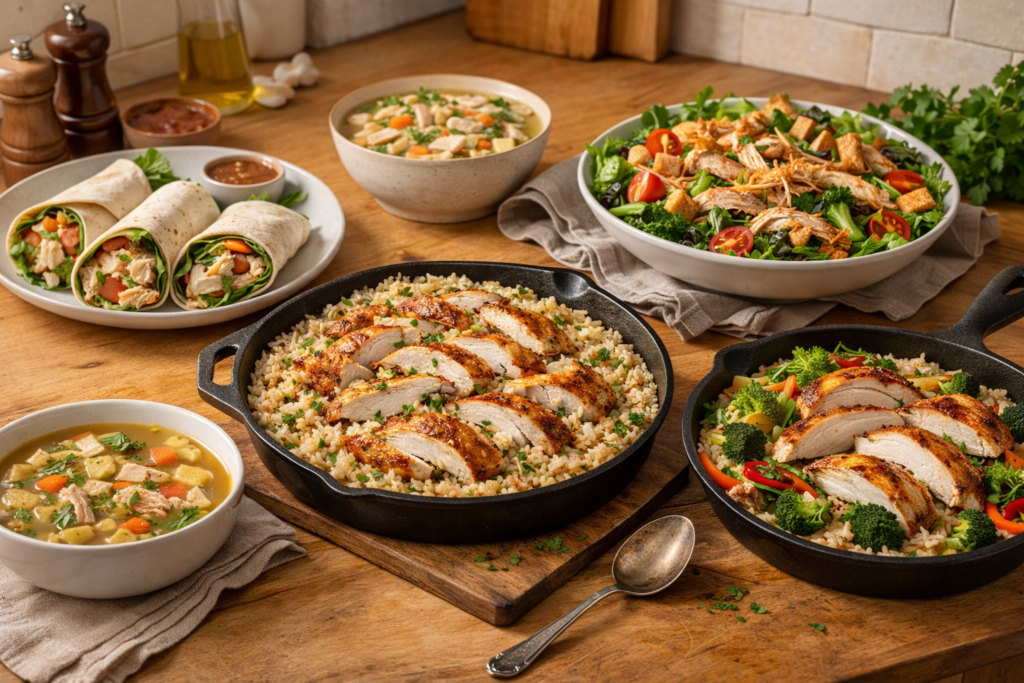
When people search for rotisserie chicken recipes, they are often looking for meals that come together quickly without sacrificing structure or flavor. These ideas are not full recipes by design. They are flexible formats that work within the principles explained throughout this article.
- Rotisserie Chicken and Rice Skillet
Warm cooked rice with aromatics and a light sauce, then fold in sliced rotisserie chicken at the final stage to preserve moisture. - Simple Chicken Wraps with Yogurt Sauce
Use warm flatbreads, a small amount of chicken, fresh vegetables, and a yogurt-based sauce finished with lemon or herbs. - Quick Chicken and Vegetable Stir-Fry
Cook vegetables first, build flavor with sauce, and add chopped rotisserie chicken only at the end for gentle reheating. - Light Chicken Soup with Rotisserie Chicken
Prepare a seasoned broth with vegetables and grains, then add pulled chicken just before serving to avoid dryness. - Rotisserie Chicken Salad with Grains or Greens
Combine small portions of chicken with a structured base like quinoa or leafy greens, finished with acid and texture. - Easy Chicken Flatbread or Naan Pizza
Build the base fully before adding chicken. Bake briefly, just long enough to warm the meat without overcooking. - Chicken and Vegetable Bowl with Simple Dressing
Let the base carry flavor. Use chicken as a supporting element rather than the main bulk of the dish.
These formats prioritize balance, moisture control, and restraint. Each one can be adjusted using the techniques discussed later in this guide to prevent repetition and maintain quality across multiple meals.Used this way, rotisserie chicken recipes stay varied across the week without feeling repetitive.
rotisserie chicken ideas
The most common mistake with rotisserie chicken is mental. Many people treat it as a finished dish instead of a component, which immediately limits creativity. Once it is viewed as a building block rather than an endpoint, its versatility becomes clear.
Think in roles, not recipes
Before choosing a recipe, decide what role the chicken should play:
- Is it the primary source of protein or a supporting element?
- Should it blend into the dish or remain texturally distinct?
- Is it meant to carry seasoning or be contrasted by it?
Answering these questions early prevents overuse. Meals often suffer not from too little chicken, but from too much of it. When chicken dominates every bite, flavors flatten and textures blur together.
Portioning with intention
A single rotisserie chicken contains multiple textures, yet many cooks remove that advantage by shredding it all at once. A more deliberate breakdown preserves flexibility and improves results.
The table below shows how each part of a rotisserie chicken can be used strategically:
| Part of the Chicken | Best Use | Why It Works |
| Breast meat | Sliced or cubed dishes | Lean texture with a clean bite |
| Thigh & leg meat | Saucy or spiced meals | Retains moisture better |
| Skin | Crisped garnish | Adds concentrated flavor |
| Bones | Light stock or grains | Enhances depth without waste |
Using different parts intentionally allows one chicken to support multiple meals without repetition.
Temperature awareness
Rotisserie chicken is most vulnerable during reheating. Adding cold chicken directly to high heat causes the proteins to tighten, resulting in dryness. A better approach is to let the chicken lose its chill slightly, then warm it gently within the dish. In most cases, the chicken should never be aggressively reheated—it only needs to be brought back to serving temperature.This small habit improves texture in most rotisserie chicken recipes, especially quick weeknight meals.
Preventing flavor fatigue
Because rotisserie chicken comes pre-seasoned, repeated use can lead to flavor fatigue. The solution is contrast rather than heavier seasoning:
- Acidity (vinegar, citrus, fermented elements) cuts through richness
- Fresh components (herbs, raw vegetables) add lift
- Texture (toasted nuts, crisp greens, breadcrumbs) creates interest
These elements refresh the chicken without masking its original character.
rotisserie chicken recipe ideas
Strong rotisserie chicken recipe ideas are built on clarity, not complexity. The best dishes do not overload ingredients or compete for attention. Instead, they follow a clear flavor direction and use rotisserie chicken as a finishing element rather than the foundation that everything else revolves around.
A common mistake is trying to “re-cook” rotisserie chicken. Because the protein is already seasoned and fully cooked, the goal should be integration, not transformation. When recipes are designed around this principle, texture improves, flavors stay balanced, and meals feel intentional rather than assembled.
Establish a clear flavor direction
Every successful dish benefits from a dominant flavor profile. Before assembling ingredients, decide which direction the meal is going to take:
- Bright and herbal, built around fresh herbs and citrus
- Smoky and savory, using spices, roasted vegetables, or charred elements
- Warmly spiced, with subtle use of cumin, coriander, or paprika
- Clean and minimal, where the chicken supports simple, balanced ingredients
Once this direction is chosen, every component should reinforce it. This prevents muddled flavors and keeps the dish focused.
Build the dish before adding chicken
One of the most effective professional habits is treating pre-cooked proteins as finishing elements. With rotisserie chicken, this approach is essential. Vegetables, grains, and sauces should be fully cooked and seasoned first. The chicken is folded in at the final stage, just long enough to warm through.
This technique preserves moisture, prevents overcooking, and allows the chicken to integrate naturally instead of dominating the dish.
Moisture management
Because rotisserie chicken has already lost some internal moisture during roasting, it performs best in environments that gently reintroduce hydration:
- Light pan sauces
- Brothy bases
- Steamed grains
- Oil- or yogurt-based dressings
Dry, high heat should be avoided unless the chicken is protected by sauce or layered beneath other ingredients.
Texture as a design tool
Repetition fatigue often comes from texture rather than flavor. Alternating between shredded, sliced, and chopped chicken can make similar seasonings feel completely different. Texture variation is one of the simplest ways to keep meals interesting, yet it is rarely discussed in typical food articles.
Season at the end
Rotisserie chicken already contains salt, and levels vary by source. Season the dish as a whole and adjust only after the chicken is incorporated. This prevents over-salting and keeps flavors controlled.
leftover rotisserie chicken recipes
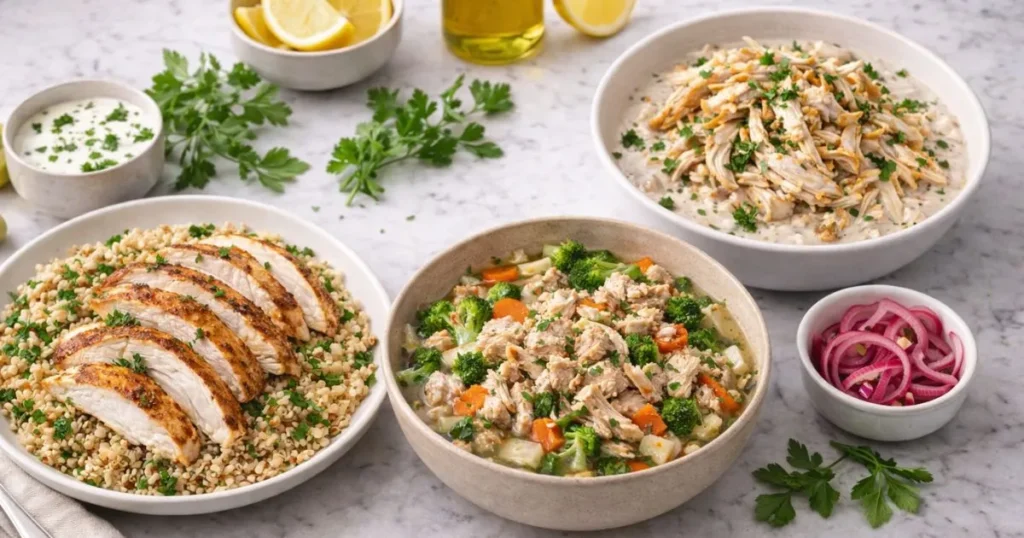
The moment rotisserie chicken becomes a leftover, quality often drops—not because the chicken is bad, but because it is handled incorrectly. Dryness, blandness, and a reheated taste are not inevitable; they are the result of poor sequencing, aggressive heat, and repetition without contrast.
Successful leftover rotisserie chicken recipes start with one principle: never treat leftover chicken as if it were raw. The chicken does not need cooking; it needs integration.
Why leftover chicken tastes worse (and how to fix it)
When rotisserie chicken is reheated improperly, moisture escapes, fibers tighten, and seasoning dulls. This usually happens when:
- Chicken is reheated alone instead of within a dish
- High, dry heat is applied too early
- Seasoning is added blindly without balance
The solution is not heavier sauces, but a better environment.
The table below summarizes common leftover problems and their best fixes:
| Common Problem | Main Cause | Best Fix |
| Dry texture | High, dry reheating | Warm gently with sauce or broth |
| Bland flavor | No acid or finishing elements | Add citrus, vinegar, or pickles at the end |
| Rubbery meat | Chicken added too early | Add chicken at the final stage only |
| Repetitive taste | Same texture used repeatedly | Rotate slicing, chopping, and pulling |
| Watery results | Too much liquid added | Use small amounts of concentrated moisture |
The rehydration rule
One of the most effective techniques for leftover rotisserie chicken is controlled rehydration. This does not mean soaking the chicken, but allowing it to absorb light moisture while warming:
- Steam from grains or vegetables
- Light broth added at the final stage
- Pan sauces built before the chicken is introduced
This restores tenderness without making the meat soggy.
Build dishes that disguise repetition
Leftover fatigue often comes from format repetition rather than flavor. Eating shredded chicken multiple days in a row—even with different seasonings—still feels repetitive. The key is rotating structure:
- Day one: sliced chicken layered into a composed dish
- Day two: chopped chicken folded into grains or vegetables
- Day three: pulled chicken integrated into a brothy or creamy base
These structural shifts make meals feel new without extra effort.
Strategic fat usage
Fat is one of the most underused tools when reviving leftover chicken. A small amount of the right fat improves mouthfeel and carries flavor:
- Olive oil for clean, herb-forward dishes
- Butter for warmth and richness
- Yogurt or tahini for creaminess without heaviness
Fat should be added to the dish, not directly to the chicken, allowing it to coat and protect the meat during reheating.
Acid at the end, always
Acidity should never be cooked into leftover chicken. Vinegar, citrus juice, pickled elements, or fermented condiments belong at the very end. They lift flavor, counteract reheated notes, and make leftovers taste intentional rather than recycled.
Rotisserie Chicken and Rice: A Flexible Base for Multiple Meals
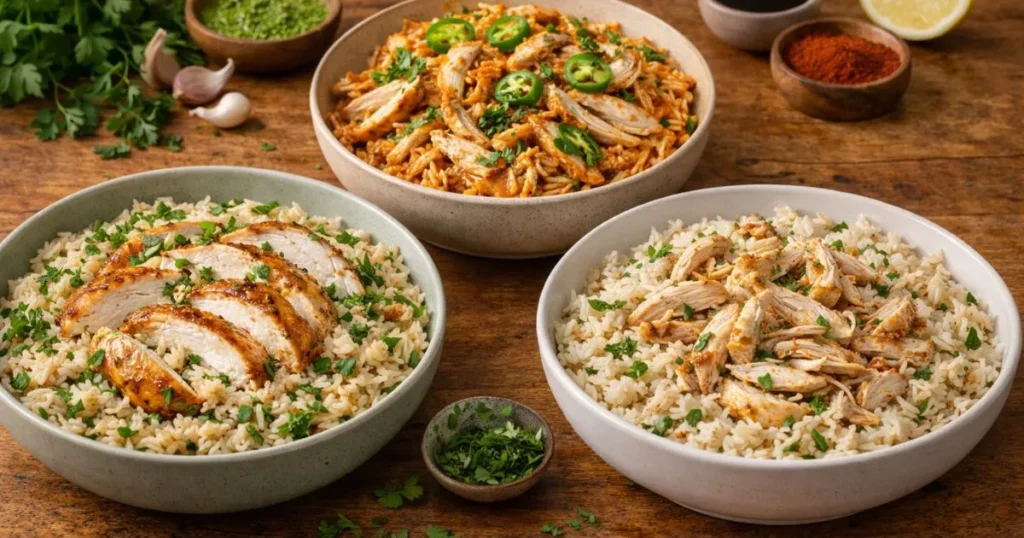
Rotisserie chicken paired with rice is one of the most practical combinations in everyday cooking, not because it is simple, but because it adapts easily to different needs. Rice provides structure, absorbs flavor efficiently, and creates a neutral base that allows rotisserie chicken to shine without overwhelming the dish. When used intentionally, this pairing becomes less of a single meal and more of a flexible system.
One of the key advantages of combining rotisserie chicken with rice is balance. The chicken brings richness and seasoning, while rice distributes that flavor evenly across the dish. This makes it easier to control portions, prevent dryness, and stretch a single chicken across multiple meals without repetition. The result feels cohesive rather than improvised.
What makes this combination especially effective is how easily it shifts direction with minimal changes. A simple adjustment in seasoning, sauce, or added vegetables can move the same base from one flavor profile to another. Rice absorbs these changes quickly, while rotisserie chicken maintains its texture when added gently at the final stage. This allows meals to feel distinct even when built from the same core ingredients.
From a planning perspective, rice-based meals work exceptionally well for meal prep. Rice holds moisture better than many other bases and reheats evenly, which protects the chicken from drying out. Preparing rice separately and combining it with chicken only when needed gives more control over texture and temperature, especially across several days.
There are, however, common mistakes that can reduce the quality of chicken-and-rice meals. Overcooking rice or adding too much liquid can result in a heavy, mushy base that masks flavor. On the other hand, reheating chicken directly in dry rice can lead to toughness. The most effective approach is to reintroduce moisture gradually—through light sauces, broth, or vegetables—before folding the chicken in at the end.
When viewed through this lens, chicken and rice is no longer a fallback option. It becomes a reliable framework that supports variety, efficiency, and consistency. Within well-planned rotisserie chicken recipes, rice serves as a quiet but powerful foundation that allows simple meals to feel structured, balanced, and intentional.
easy meals with rotisserie chicken
Ease in cooking is often misunderstood. It does not mean cutting quality or rushing decisions; it means removing unnecessary friction. Easy meals with rotisserie chicken work best when the number of moving parts is limited, but each part has a clear role.
The advantage of rotisserie chicken is that the protein is already handled. That shifts the focus from cooking to assembly, timing, and balance. When meals are built with that logic, they come together quickly without feeling incomplete or repetitive.
The five-element structure
One of the most reliable ways to create easy meals is to follow a simple structure:
- A base
- Rotisserie chicken
- One dominant flavor component
- One contrasting element
- A finishing touch
When these five elements are present and balanced, meals feel complete even with minimal effort.
The table below shows how this framework applies to different types of easy meals:
| Meal Type | Chicken Amount | Best Base | Key Focus |
| Grain bowls | Small | Rice, quinoa | Let the sauce carry flavor |
| Vegetable-based meals | Medium | Roasted or sautéed vegetables | Add acid at the end |
| Soups & broths | Minimal | Light stock | Add chicken last |
| Wraps & flatbreads | Moderate | Pita, wraps | Keep texture intact |
| Salads | Small | Greens or grains | Balance freshness and protein |
This framework keeps meals flexible while preventing overuse of chicken.
Choosing the right base
The base determines how the chicken behaves in the dish:
- Grains absorb flavor and provide structure
- Vegetables create lightness and contrast
- Bread or wraps deliver immediacy and texture
Choosing the base first simplifies every decision that follows and speeds up assembly.
Chicken quantity matters more than you think
One of the most common mistakes in “easy” meals is adding too much chicken. Excess protein creates heaviness and dulls flavor contrast. In most cases, less chicken produces a better result, especially when paired with grains or vegetables that carry seasoning well.
A useful guideline:
- Grain-based meals need less chicken than expected
- Vegetable-forward meals benefit from slightly more
- Soups and brothy dishes require the least
This restraint also allows one chicken to stretch across more meals without sacrificing satisfaction.
Fast sauces beat complex seasoning
Easy meals fail when cooks try to build flavor from scratch every time. Instead, rely on fast, high-impact sauces:
- Yogurt mixed with herbs and citrus
- Olive oil blended with spices
- Store-bought sauces adjusted with acid or heat
These sauces provide instant direction and reduce prep time dramatically.
Practical meal ideas that fit this framework
This structure works especially well for a few reliable meal formats that prioritize speed without sacrificing balance. For example, quick skillet meals allow flavors to develop before the chicken is added, making them ideal for busy evenings. Simple combinations like sautéed vegetables finished with rotisserie chicken and a light sauce deliver complete meals in minutes.
One-pot meals follow the same logic. By building the base first—whether grains, vegetables, or broth—and folding the chicken in at the end, these dishes minimize cleanup while preserving texture. This approach works particularly well for soups, stews, and rice-based meals that benefit from gentle heat.
Light chicken salads also fit naturally into this system. When rotisserie chicken is paired with crisp vegetables, grains, or greens and finished with a balanced dressing, the result feels intentional rather than leftover-driven. These meals rely more on contrast and freshness than quantity, which keeps them satisfying without feeling heavy.
Heat management for speed
Quick meals often fail because the chicken is added too early. The correct sequence is simple:
- Cook or warm the base
- Build or heat the sauce
- Add chicken briefly at the end
This minimizes time on heat and preserves moisture and texture.
Making “easy” feel intentional
The difference between a rushed meal and a satisfying one often comes down to the final moments. A finishing element—fresh herbs, toasted seeds, or a squeeze of citrus—signals completion. These details require almost no time, yet they elevate even the simplest meals.
Planning Easy Meals with Rotisserie Chicken
Planning is where rotisserie chicken delivers its biggest advantage. Knowing the protein is already cooked allows meals to be designed around structure instead of stress.
Backward meal planning
Rather than planning meals from scratch, plan backward:
- Decide how many meals the chicken should support
- Allocate portions intentionally
- Assign different formats to each portion
This prevents running out of chicken too early or overusing it in a single meal.
Portion logic
Not every meal needs the same amount of chicken. Understanding this stretches value and improves balance:
- Grain-heavy meals require less chicken
- Vegetable-forward meals need slightly more
- Soups and brothy dishes use the least
This logic keeps meals satisfying without excess.
Storage that preserves quality
Proper storage protects texture and flavor:
- Store meat in airtight containers
- Keep white and dark meat separate when possible
- Avoid storing chicken uncovered in the refrigerator
Good storage slows moisture loss and extends usability without compromising quality.
Why This Approach Works Long-Term
This approach holds up over time because it is built around principles rather than individual meals. Instead of relying on fixed instructions, it gives you a system that adapts to different schedules, ingredients, and preferences. That flexibility is what prevents burnout and repetition.
By focusing on sequencing, portion control, and contrast, rotisserie chicken stops being a one-night solution and becomes a reliable foundation for multiple meals. The result is a set of rotisserie chicken recipes that continue to work week after week, even as needs and routines change.
This long-term flexibility is what separates reliable rotisserie chicken recipes from one-off meals.
Conclusion
Rotisserie chicken recipes work best when they are treated as systems rather than shortcuts. The real advantage is not speed alone, but control—control over texture, moisture, flavor balance, and repetition. When rotisserie chicken is integrated thoughtfully, it becomes possible to cook efficiently without sacrificing quality or intention.
By focusing on structure instead of strict recipes, home cooks can create meals that feel deliberate even on the busiest nights. This approach makes it easier to develop reliable rotisserie chicken dinner ideas that do not rely on the same flavors or formats week after week. Each meal feels distinct, balanced, and satisfying, even when built from the same starting ingredient.
Ultimately, a successful rotisserie chicken dinner is not defined by complexity or novelty, but by restraint and sequencing. When heat is managed carefully, portions are intentional, and contrast is added at the right moment, rotisserie chicken stops being a convenience item and becomes one of the most versatile tools in everyday cooking.
FAQ – Frequently Asked Questions
How long can rotisserie chicken be safely stored in the refrigerator?
Rotisserie chicken can be stored safely in the refrigerator for 3 to 4 days when kept in an airtight container. For best results, remove the meat from the bones and limit exposure to air to reduce moisture loss.
According to food safety guidelines from the USDA, cooked chicken should be stored properly to maintain quality and safety.
What is the best way to reheat rotisserie chicken without drying it out?
The best method is gentle, indirect reheating. Add rotisserie chicken to warm dishes at the final stage, or reheat it covered with a small amount of broth or sauce. Avoid high, dry heat whenever possible.
Can rotisserie chicken be frozen for later use?
Yes. Rotisserie chicken freezes well when shredded or sliced and stored in freezer-safe containers or bags. It can be frozen for up to 3–4 months and should be thawed slowly in the refrigerator to preserve texture.
Is rotisserie chicken healthier than cooking chicken at home?
Rotisserie chicken can be a healthy option, especially when the skin is removed. However, store-bought versions may contain more sodium. Pairing it with fresh ingredients and avoiding extra salt helps maintain balance.
How much meat does one rotisserie chicken usually provide?
A standard rotisserie chicken typically yields 2 to 3 cups of usable meat, depending on its size. This amount is enough to support multiple meals when portions are planned intentionally.
Why does rotisserie chicken sometimes taste dry the next day?
Dryness usually results from improper storage or reheating. Exposure to air and high heat causes moisture loss. Airtight storage and gentle reheating help preserve tenderness.
Can rotisserie chicken be used in cold meals like salads or wraps?
Absolutely. Rotisserie chicken works well in cold or room-temperature dishes such as salads, wraps, and grain bowls. Letting the chicken sit briefly at room temperature before serving improves flavor and texture.
Can rotisserie chicken be used for meal prep?
Absolutely. Rotisserie chicken recipes is ideal for meal prep because it’s already cooked, stores well, and can be used in many dishes throughout the week.